
The Emergence of Philadelphia Craft
by Sid Sachs, Chief Curator and Director of Exhibitions at the University of the Arts from 1999–2024
For nearly three centuries, Philadelphia has stood at the center of craft production in America, its legacy rooted in a robust culture of skilled labor, artisanal excellence, and innovative design. From early furniture makers and silversmiths to textile producers and ceramicists, the city cultivated a deep respect for the handmade object. This importance was bolstered by the 1876 Centennial and expanded dramatically in the postwar era, fueled by the growth of art schools, galleries, curators, and critics who increasingly recognized craft as a vital component of contemporary artistic discourse. By the late twentieth century, Philadelphia had become not only a historic hub but also a dynamic engine for the evolution of American craft. Fifty years ago, local individuals and institutions consciously banded together to ignite a remarkable resurgence—one whose impact continues to resonate today.
By 1974, civic leaders successfully thwarted large-scale redevelopment plans that threatened to erase the character of South Street, preserving instead a fertile environment for artistic experimentation. This decision allowed for the establishment of bohemian storefronts, galleries, and theaters that would become central to the city’s creative identity. Among the earliest anchors was Ruth Snyderman’s Works Gallery, which moved into the neighborhood in 1970. Two years later, her husband Rick joined Ruth to establish Snyderman Gallery, forming a partnership that would prove deeply influential in promoting studio craft for the next 52 years.
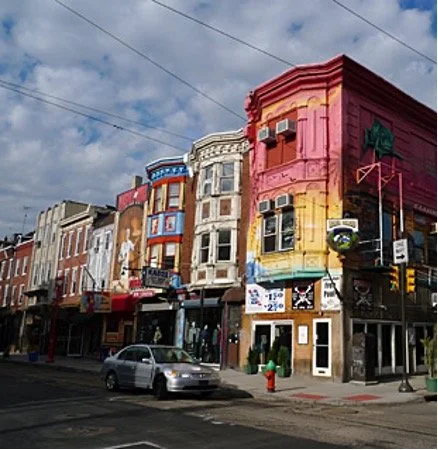
South Street in the 1970s.
In 1970 the Wharton Esherick Museum was founded, establishing his home and studio as an important site celebrating art in wood. In 1973, Richard Kagan opened his pioneering atelier, the first American gallery dedicated exclusively to studio furniture. His efforts helped elevate furniture from functional object to sculptural art form. At the same time, individual artisans began transitioning into more ambitious nonprofit structures. Albert LeCoff founded the Amaranth Gallery and Workshop in nearby Glenside, creating a platform for experimental woodturning. His North American Turned Object Show, exhibited at Kagan and Works galleries, traveled to five national venues, bringing wider recognition to the medium. In 1986, LeCoff and David Ellsworth co-founded the American Association of Woodturners, while Albert and his twin brother Alan also established the nonprofit Wood Turning Center, further institutionalizing the field.
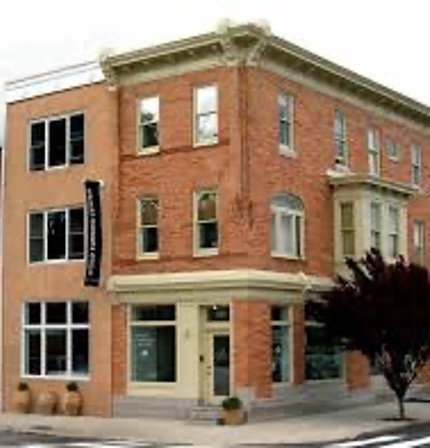
Original Home of Wood Turning Center
(Later, Museum for Art in Wood)
501 Vine Street, Philadelphia
Ceramics played an equally crucial role in Philadelphia’s craft renaissance. In 1967, Bucks County acquired the historic Moravian Pottery and Tile Works, originally founded by Henry Chapman Mercer. When the Tile Works was revived in 1974, graduates of the Philadelphia College of Art began producing Mercer’s original designs, reconnecting contemporary practice with historical tradition. That same year, five Moore College–affiliated ceramic artists—Ken Vavrek, Jill Bonovitz, Janice Merendino, Betty Parisano, and Kathy Regan—established a communal workspace on Orianna Street that they called The Clay Studio. To sustain operations, they expanded their membership, creating a collaborative model that emphasized shared resources and mutual support.
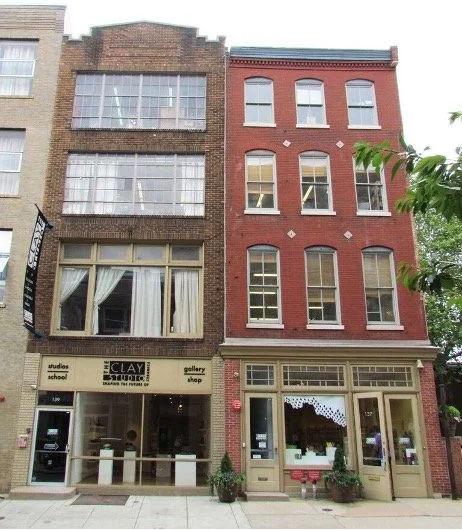
The Clay Studio’s former facility
on 2nd Street in Old City
This cooperative spirit culminated in the founding of The Clay Studio in 1974. Over the following decades, the organization relocated multiple times within Old City before settling into the 2nd Street Art Building in 1990, where it became a cornerstone of Philadelphia’s ceramic community. Its exhibitions, residencies, and educational programs nurtured generations of artists and helped position the city as a national leader in ceramics.
A key figure in this emerging ecosystem was Helen Drutt. In the mid-1960s, she founded the Philadelphia Council of Professional Craftsmen (PCPC), providing a formal network for artists working outside traditional fine art hierarchies. Through a chance meeting with Reverend Richard M. Jones at a Marshall McLuhan lecture, Drutt was offered office space that enabled the potential organization’s first meeting. The first PCPC exhibition debuted at the Philadelphia chapter of the American Institute of Architects in 1967, marking a significant step toward institutional recognition.
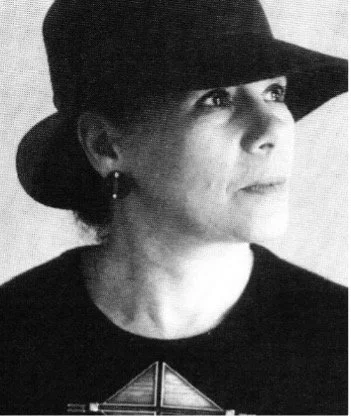
Helen Drutt
Drutt’s curatorial vision extended into academia when George Culle invited her to develop the curriculum teaching one of the first American courses on the history of modern and contemporary craft at the Philadelphia College of Art in 1973. Her eventual transition into gallery ownership was both practical and visionary: Needing storage space after organizing exhibitions, she established her eponymous gallery in 1974, which quickly became a vital venue for contemporary craft. Simultaneously, academic galleries expanded their role. Under Dianne Perry Vanderlip, Moore College of Art & Design began presenting ambitious exhibitions that frequently included craft artists, helping bridge the gap between fine art and applied media.
Philadelphia’s 1976 Bicentennial celebration further amplified the visibility of craft through major museum initiatives and public programming. At the Philadelphia Museum of Art (PMA), curator Darrell Sewell authored influential essays in the Three Centuries of American Art catalog, effectively codifying a local craft canon. Meanwhile at the invitation of Ralph Collier, Director of the Campbell Soup Museum, Drutt curated Soup Tureens: 1976, an exhibition that juxtaposed contemporary ceramic works with historical objects from the company’s collection, demonstrating the continuity and evolution of the medium.
Support structures for craft continued to expand in the 1970s and 1980s. Under the leadership of PMA director Evan Turner and interior designer Cynthia Drayton, the Inter-Society for Decorative Arts and Design—founded in 1970 as a Museum affinity group for contemporary design including craft—evolved into Collab. In 1977, the PMA launched the Philadelphia Museum of Art Craft Show, one of the first retail studio craft fairs of its kind. It quickly became a national model, attracting collectors, curators, and artists from across the country.
Parallel initiatives reinforced community engagement. Marion Boulton Stroud founded the Fabric Workshop and Museum in 1977, which brought printmaking and textile production into dialogue with contemporary art. By conversations with Drutt and PMA director Anne d’Harnoncourt, many early projects featured craft artists, further integrating disciplines.
As rising rents in the mid-1980s displaced South Street’s artistic community, Philadelphia’s Old City neighborhood emerged as a new center. Galleries, studios, and nonprofits clustered there, creating a dense cultural district. Drutt relocated her gallery multiple times, eventually opening a major space on 1724 Walnut Street in 1984. Around the same time, Robert Aibel founded Moderne Gallery, specializing in studio craft, while the Snydermans moved their gallery to Cherry Street. These developments solidified Old City as a hub for both contemporary and historical craft.
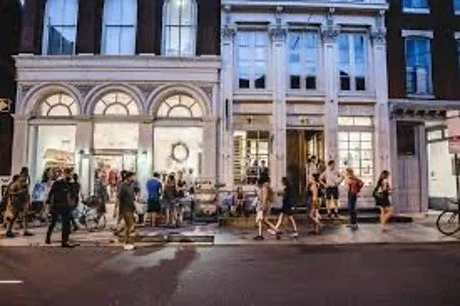
Snyderman Gallery
on Cherry Street
The 1990s brought further institutional validation. The PMA expanded its craft holdings, including significant works by Wharton Esherick, whose legacy became central to Philadelphia’s identity. Institutions such as the James A. Michener Art Museum incorporated permanent installations dedicated to artists like George Nakashima, highlighting the region’s rich furniture-making tradition.
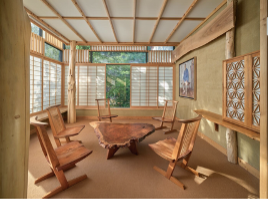
Michener Museum:
Nakashima Reading Room
Funding from organizations like The Pew Charitable Trusts provided crucial support through fellowships and exhibition initiatives. These programs energized the local scene, fostering new talent and encouraging ambitious projects. By the late 1990s, Philadelphia’s craft community was so vibrant that some began referring to the city as the “sixth borough” of New York City.
Entering the twenty-first century, broader cultural shifts reshaped the perception of craft. Influenced by theorists such as Peter Dormer, as well as critics like Janet Koplos, Glenn Adamson, and Jenni Sorkin, artists began embracing ornamentation, vernacular design, and cross-disciplinary approaches. Art critics, galleries, and museums began to acknowledge that craft was a subset of art, not a subordinate pursuit. In 2006 the Philadelphia Museum of Art hired Elisabeth Agro as the first Craft curator in a major museum in the United States.
New galleries and institutions reflected this expanded perspective. Wexler Gallery, founded by Lewis Wexler and Sherri Apter Wexler, introduced international artists and designers, while exhibitions at the Philadelphia Art Alliance brought global perspectives to local audiences. Major shows such as Poetics of Clay emphasized the international scope of ceramic practice.
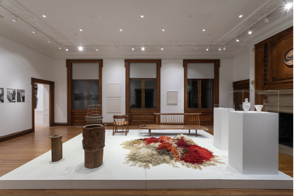
Invisible City Exhibition Installation at
Art Alliance
Academic institutions also played a critical role. The relocation of the Tyler School of Art and Architecture to Temple University’s main campus in 2009 provided state-of-the-art facilities for glass, metals, and ceramics. That same year, the Institute of Contemporary Art presented Dirt on Delight: Impulses That Form Clay, a landmark exhibition that brought together historical and contemporary artists, blurring boundaries between craft, fine art, and design.
Collaborative initiatives continued to strengthen the community. In 2015, CraftNOW Philadelphia was launched, uniting major institutions—including the PMA, The Clay Studio, and the Center for Art in Wood—around a shared mission to promote craft. The organization’s public programs, publications, and support of partner organizations have further elevated Philadelphia’s profile on the national stage.
Individual artists also gained prominence during this period. Roberto Lugo, a Philadelphia native, emerged as a leading voice in contemporary ceramics, blending classical forms with hip-hop culture and social commentary. His rapid rise—from local exhibitions to major museum shows—reflects the city’s ongoing capacity to nurture innovative talent.
The 2020s have brought both challenges and opportunities. The COVID-19 pandemic disrupted exhibitions and forced institutions to adapt, but it also underscored the enduring appeal of handmade objects in an increasingly digital world. Major developments, such as the opening of The Clay Studio’s new building in 2022 and expansions at the Woodmere Art Museum, signal continued growth.
Today, Philadelphia’s craft ecosystem is more interconnected and resilient than ever. From historic sites like the Moravian Pottery and Tile Works to contemporary spaces like the Crane Arts Building and the Village of Industry and Art in the former UArts building, the city offers a rich tapestry of opportunities for artists, scholars, and audiences alike. This dynamism reflects a broader cultural shift in which craft is recognized not merely as a category of objects but as a vital mode of thinking, making, and engaging with the world.
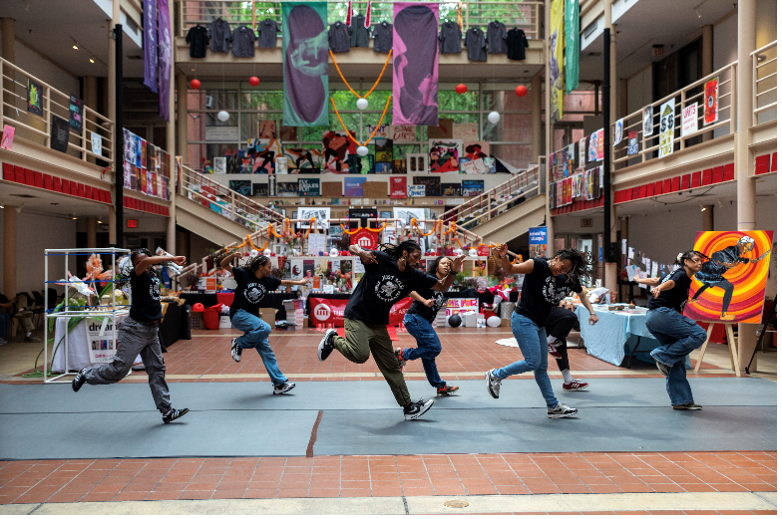
Performance at
Village of Industry and Art
As Philadelphia celebrates this ongoing legacy, it is clear that its craft community remains a powerful force—rooted in history, yet continually evolving. The resurgence that began fifty years ago has matured into a sustained movement, one that continues to shape both local identity and national discourse.
Sid Sachs served as Chief Curator and Director of Exhibitions at the University of the Arts from 1999-2024, arranging both individual and group artist shows. He previously curated exhibitions at Rutgers University and The Pennsylvania Academy of the Fine Arts. He is the author of the book Philadelphia and the Vernacular Avant-garde, which was published in conjunction with a multi-venue exhibition in 2020.